


Heat-shrink technology for district heating joints
Covalence makes the heat‑shrink sleeve systems that seal the field joints of pre‑insulated district heating and cooling pipes. A cross‑linked PE‑X backing and a dual‑adhesive system keep moisture out of the joint casing. The products are tested and certified to EN‑489:2009 (FFI).
Covalence, products
District heating
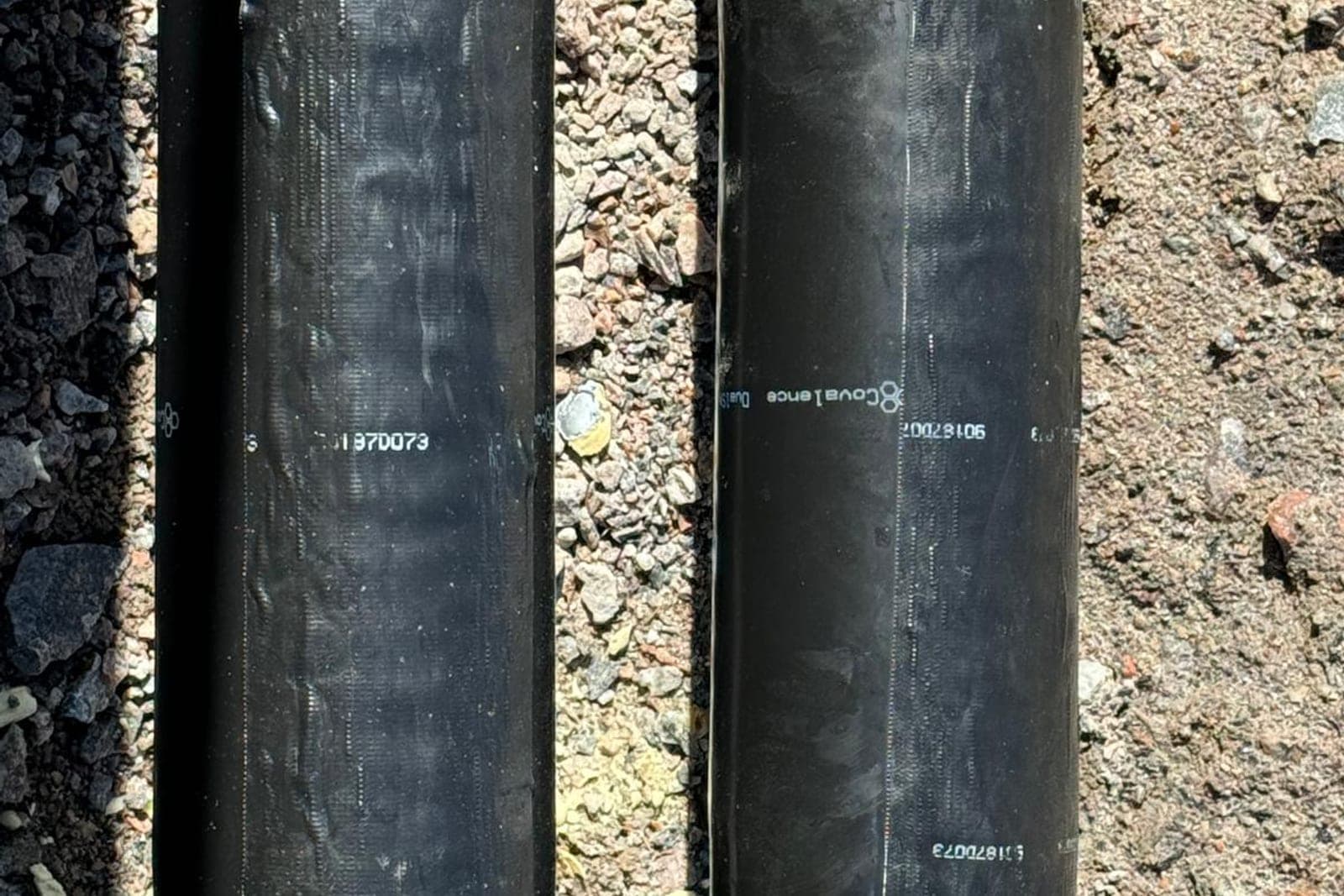
RJS-E
Wrap‑around heat‑shrink sleeve for sealing the joint casings of pre‑insulated district heating pipes.
WPCP‑IV
Closure patch for Covalence wrap‑around heat‑shrink sleeves.
FOPS‑100
Heat‑applied closure patch that seals the foam‑injection hole in a pre‑insulated pipe casing after PUR foaming, keeping water out of the insulation.
Perp Melt Stick
Heat‑melted PE copolymer stick for repairing small surface scratches in a PE coating where the damage does not reach the steel.
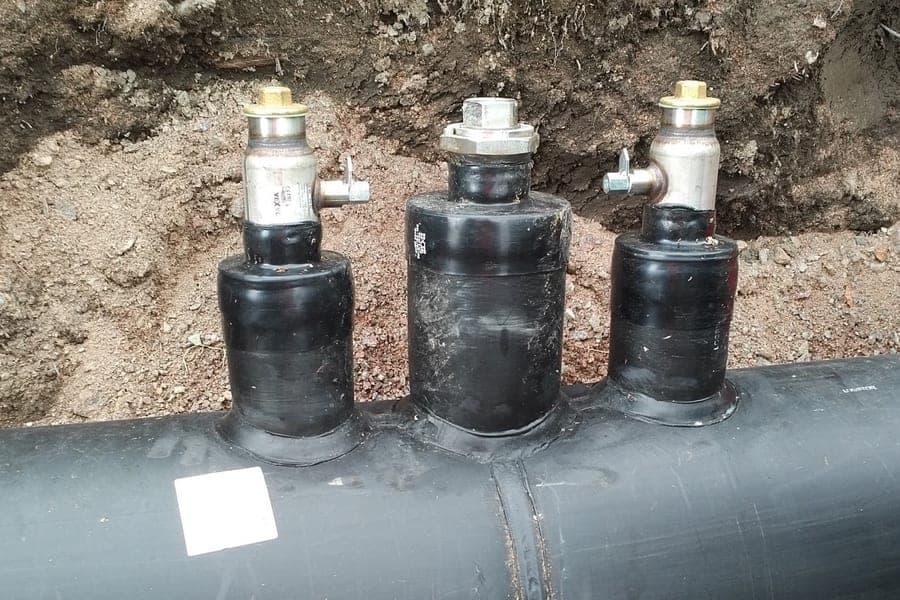
DHEC
End cap for the terminations of a pre‑insulated pipeline: a shrink component that closes the casing end and keeps water out of the insulation where the line ends or breaks.
CCS‑DHEC
Zippered, fibre‑glass reinforced end cap for the ends of pre‑insulated pipe.
S1113 sealing tape
Adhesive sealing tape on a roll with a release liner.
TPSM
Tubular heat‑shrinkable sleeve for corrosion protection of welded pipe joints in distribution lines.
CPSM‑C30
Thick‑wall tubular heat‑shrinkable sleeve whose high shrink ratio covers irregular shapes.
MPSM
Tubular heat‑shrinkable sleeve for corrosion protection of socket joints.
WPC‑C30
Wrap‑around heat‑shrink sleeve for the girth welds of steel pipe in distribution and transmission systems.
WPCT
Wrap‑around heat‑shrink sleeve for the girth welds of steel pipe in distribution and transmission systems, the same family as WPC‑C30 and also available in a narrower 285 mm width.

Specialty products
Alongside the standard range runs a set of specialty products that are asked for less often but have their own place.
S1137 mastic filler tape
High‑viscosity sealant‑based mastic tape used to fill damaged coating before a repair patch or sleeve goes on, restoring the original coating thickness.
Gas lines and steel pipe
WPCP‑IV
Closure patch for Covalence wrap‑around heat‑shrink sleeves.
Perp Melt Stick
Heat‑melted PE copolymer stick for repairing small surface scratches in a PE coating where the damage does not reach the steel.
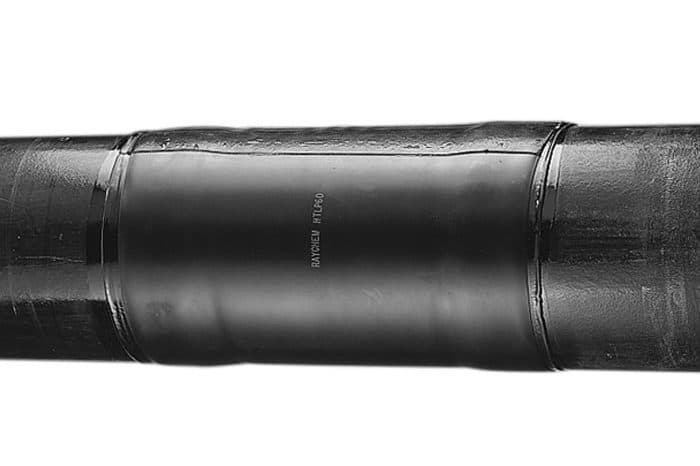
HTLP60‑DCS
Wrap‑around heat‑shrink sleeve for the girth welds of steel pipe on gas and other transmission lines.
Dirax
Fibre‑glass reinforced wrap‑around heat‑shrink sleeve for horizontal directional drilling.
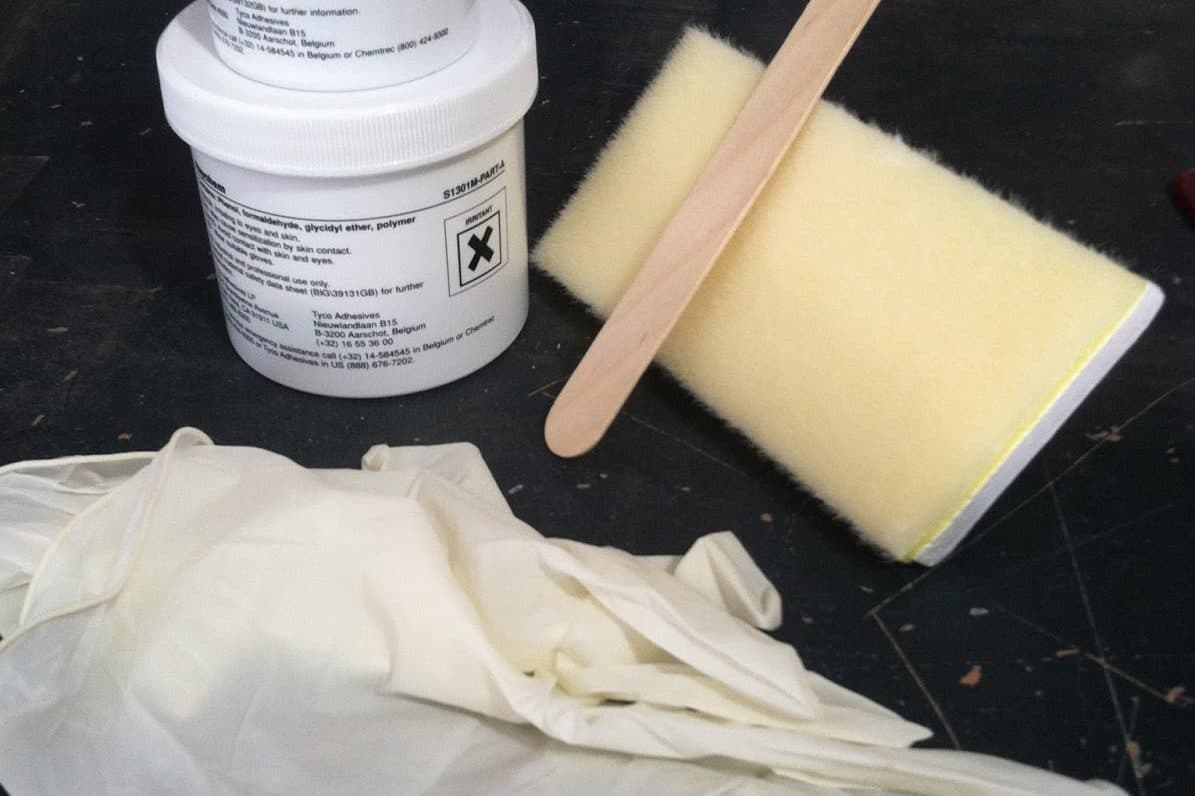
S1301‑M epoksi
Solvent‑free two‑component epoxy primer for Covalence three‑layer systems (HTLP60‑DCS, HTLP80, DIRAX) on steel pipe girth welds.
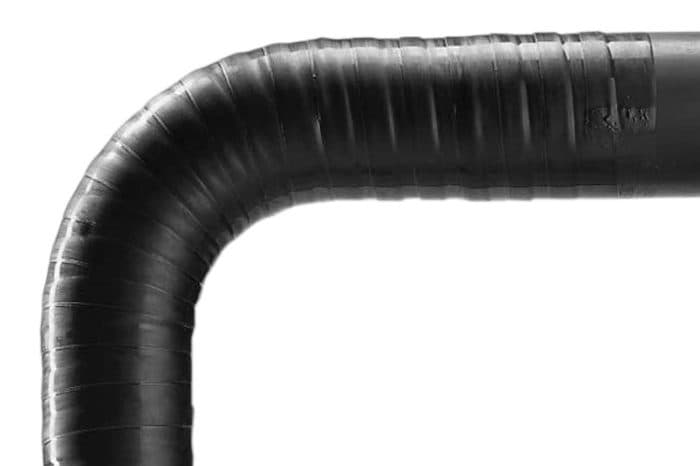
Flexclad‑II‑C30
Stretchable, hand‑wrapped heat‑shrink tape for corrosion protection of pipe bends and small‑diameter straight pipe in distribution networks.
S1137 mastic filler tape
High‑viscosity sealant‑based mastic tape used to fill damaged coating before a repair patch or sleeve goes on, restoring the original coating thickness.
Joint construction
RJS-E uses two adhesives for two jobs. A high-shear hot-melt at the edges anchors the sleeve in place against ground movement. A visco-elastic mastic in the centre forms the actual moisture seal and fills surface irregularities.
- 1Cross‑linked PE backing
- 2Hot‑melt adhesive, along both edges
- 3Visco‑elastic mastic, centre
- 4PE casing
- 5PUR insulation and steel pipe
Sizes and order codes
These come from Kampek's own product catalogue. Take the code from the row and request a quote with it, so nobody has to retype it. Availability is confirmed with the quote.
WPCP‑IV closure patch
The two widths do not cover the same lengths. A dash means that combination is not in the catalogue.
| Length (mm) | Width 100 mm | Width 150 mm |
|---|---|---|
| 153 | WPCP-IV-100X153(S50) | – |
| 170 | WPCP-IV-100X170(S50) | WPCP-IV-150X170(S50) |
| 190 | WPCP-IV-100X190(S50) | WPCP-IV-150X190(S50) |
| 218 | WPCP-IV-100X218(S50) | WPCP-IV-150X218(S50) |
| 255 | WPCP-IV-100X255(S50) | WPCP-IV-150X255(S50) |
| 283 | WPCP-IV-100X283(S50) | WPCP-IV-150X283(S50) |
| 298 | WPCP-IV-100X298(S50) | – |
| 320 | WPCP-IV-100X320(S50) | WPCP-IV-150X320(S50) |
| 430 | – | WPCP-IV-150X430(S50) |
| 438 | WPCP-IV-100X438(S50) | WPCP-IV-150X438(S50) |
| 638 | WPCP-IV-100X638(S50) | WPCP-IV-150X638(S50) |
| 768 | WPCP-IV-100X768(S50) | WPCP-IV-150X768(S50) |
| 898 | WPCP-IV-100X898(S50) | WPCP-IV-150X898(S50) |
DHEC end cap
The size number is the catalogue's own series number, not a millimetre dimension. The source does not say what it measures.
| Size | Code |
|---|---|
| 2000 | DHEC-2000(C30) |
| 2060 | DHEC-2060(C30) |
| 2100 | DHEC-2100(C30) |
| 2200 | DHEC-2200(C30) |
| 2300 | DHEC-2300(C30) |
| 2340 | DHEC-2340(C30) |
| 2400 | DHEC-2400(C35) |
| 2500 | DHEC-2500(C30) |
| 2600 | DHEC-2600(C20) |
| 2630 | DHEC-2630(C30) |
| 2700 | DHEC-2700(C30)) |
| 2800 | DHEC-2800(C20) |
| 2900 | DHEC-2900(C20) |
| 3000 | DHEC-3000(C15) |
| 3200 | DHEC-3200(C20) |
| 3250 | DHEC-3250(C20) |
| 3250-P604 | DHEC-3250-P604(C20) |
| 3280 | DHEC-3280(C20) |
| 3300 | DHEC-3300(C20) |
| 3350-01 | DHEC-3350-01(C20) |
| 3350-02 | DHEC-3350-02(C20) |
| 3350-03 | DHEC-3350-03(C18) |
| 3360-01 | DHEC-3360-01(C22) |
The closure and the termination
- 1PE casing
- 2Wrap‑around heat‑shrink sleeve: backing and adhesive
- 3Longitudinal overlap of the sleeve
- 4WPCP‑IV closure patch over the seam
- 5Same cross‑linked HDPE backing and adhesive as the sleeve
- 1PE casing
- 2PUR insulation
- 3DHEC end cap, casing down to carrier pipe
- 4The cap seals down onto the carrier pipe
- 5Carrier pipe continues uninsulated
Need an article number or order code? The full catalogue is searchable. Product catalogue →
Applications
- District heating joint sealing and corrosion protection
- District cooling networks
- Water pipeline networks
- Oil and gas pipeline joints
When a joint leaks, the street gets dug up. In a gas line the consequences are an entirely different scale.
Covalence, common questions
What are Covalence heat‑shrink sleeves used for?
Which standard is Covalence tested to?
Which casing diameters does RJS-E cover?
What is the Permanent Change Indicator?
What operating temperature does Covalence withstand?
Where do I get Covalence product data and installation instructions?
Request a quote: Covalence
Briefly describe project and quantities; we'll reply on availability and terms.